Introduction
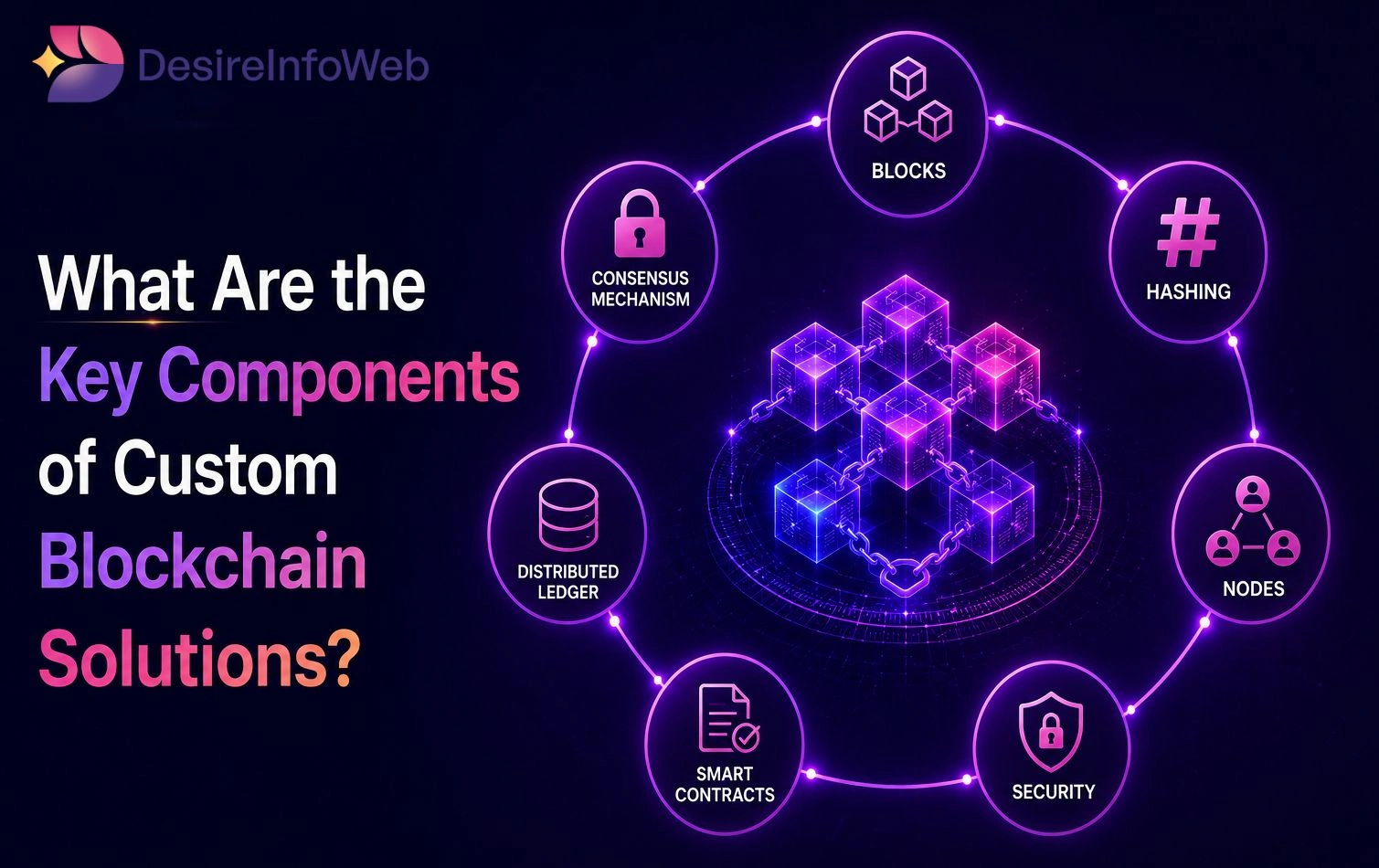
Blockchain technology is reworking industries through the use of providing a stable, clear, and decentralized structure. Understanding the fundamental components of a Custom Blockchain Solution is important for anyone exploring blockchain development, cryptocurrency platforms, or decentralized applications The three central components of a blockchain are blocks, hashing, and nodes. Together, they discover a stable and manipulation-resistant society.
The Main Fundamental Components of Blockchain
A blockchain is built using many core links that form together to create a secure, transparent, and decentralized machine. Understanding these essential additives is essential due to the fact that they form the basis of the ways in which the blockchain era works.
Component | Purpose |
|---|---|
Blocks | Store transaction and blockchain data |
Hashing | Secures and links blockchain records |
Nodes | Maintain and validate the network |
1. Blocks
A blockchain is made up of multiple blocks connected together in sequence.
Each block stores important information related to transactions and blockchain activity.
What Does a Block Contain?
Component | Description |
|---|---|
Transaction Data | Sender address, receiver address, and amount transferred. |
Timestamp | Date and time when the block was created. |
Previous Block Hash | Links the block to the previous block in the chain. |
Current Block Hash | Unique digital fingerprint generated from block data. |
- Block 2 stores the hash of Block 1.
- Block 3 stores the hash of Block 2.
- If Block 1 changes, its hash changes.
- The chain becomes invalid, making tampering detectable.
2. Hashing
Hashing is one of the most important security mechanisms in blockchain. A hash is a fixed-length output generated from input data using a cryptographic hashing algorithm. You can think of it as a digital fingerprint of data.
Input: blockchain
Possible Hash Output: ef7797e13d5c8579...
Even a very small change in the input produces a completely different hash.
Example:
Input 1:
blockchain
Input 2:
Blockchain
Although only one letter changed, the generated hash becomes entirely different.
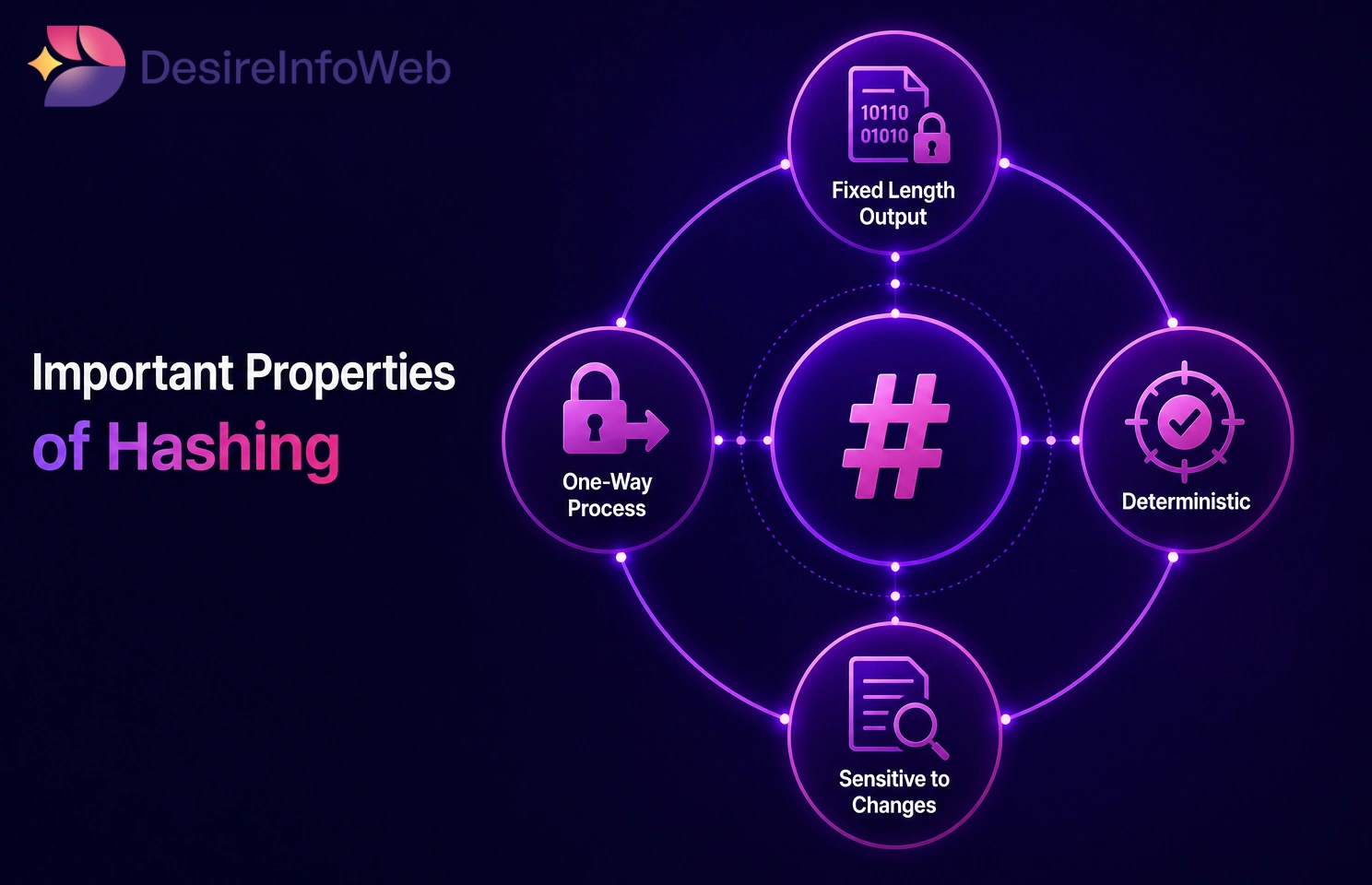
Important Properties of Hashing
Property | Description |
|---|---|
Fixed Length Output | No matter how large or small the input is, the hash output length remains fixed. |
Deterministic | The same input always produces the same hash output on every computer. |
Sensitive to Changes | Even a tiny modification in data creates a completely different hash. |
One-Way Process | Hashes are designed to be extremely difficult to reverse back into the original data. |
- Secure data
- Detect tampering
- Connect blocks securely
- Maintain record integrity
3. Nodes
A node is a computer connected to the blockchain network. Nodes are responsible for maintaining and assisting the blockchain device.
Responsibilities of Nodes
- Store blockchain data
- Verify transactions
- Validate blocks
- Communicate with other nodes
- Maintain network synchronization
Different Types of Nodes
Node Type | Purpose |
|---|---|
Full Nodes | Store the complete blockchain and verify transactions. |
Validator / Mining Nodes | Participate in consensus and validate new blocks. |
Lightweight Nodes | Store limited data and depend on full nodes. |
Simple Analogy
Blockchain can be compared to a shared digital notebook. Blocks are the pages, hashes are the security seals protecting each page, and nodes are the people maintaining synchronized copies of the notebook. If one page is modified, everyone else can immediately detect the discrepancy.
How These Components Work Together
- Transactions are stored inside blocks.
- Hashing secures and links blocks together.
- Nodes verify and distribute information across the network.
Together, these components create a decentralized and tamper-resistant system capable of maintaining trust and transparency without centralized control.
Conclusion
The central connections of blockchain blocks, hashing, and nodes shine together to create a stable, transparent, decentralized, tamper-resistant digital environment These elements ensure that records have integrity, community credibility, and trust without the need for external governance.
As companies stick to embarking on increasing technologies, the information that underpins blockchain principles becomes an increasing number of critical. Whether it’s increasingly decentralized applications, stable transaction systems, or progressive Digital Transformation Services, blockchain provides a robust technical framework for building reliable, future-ready digital infrastructure.