Introduction
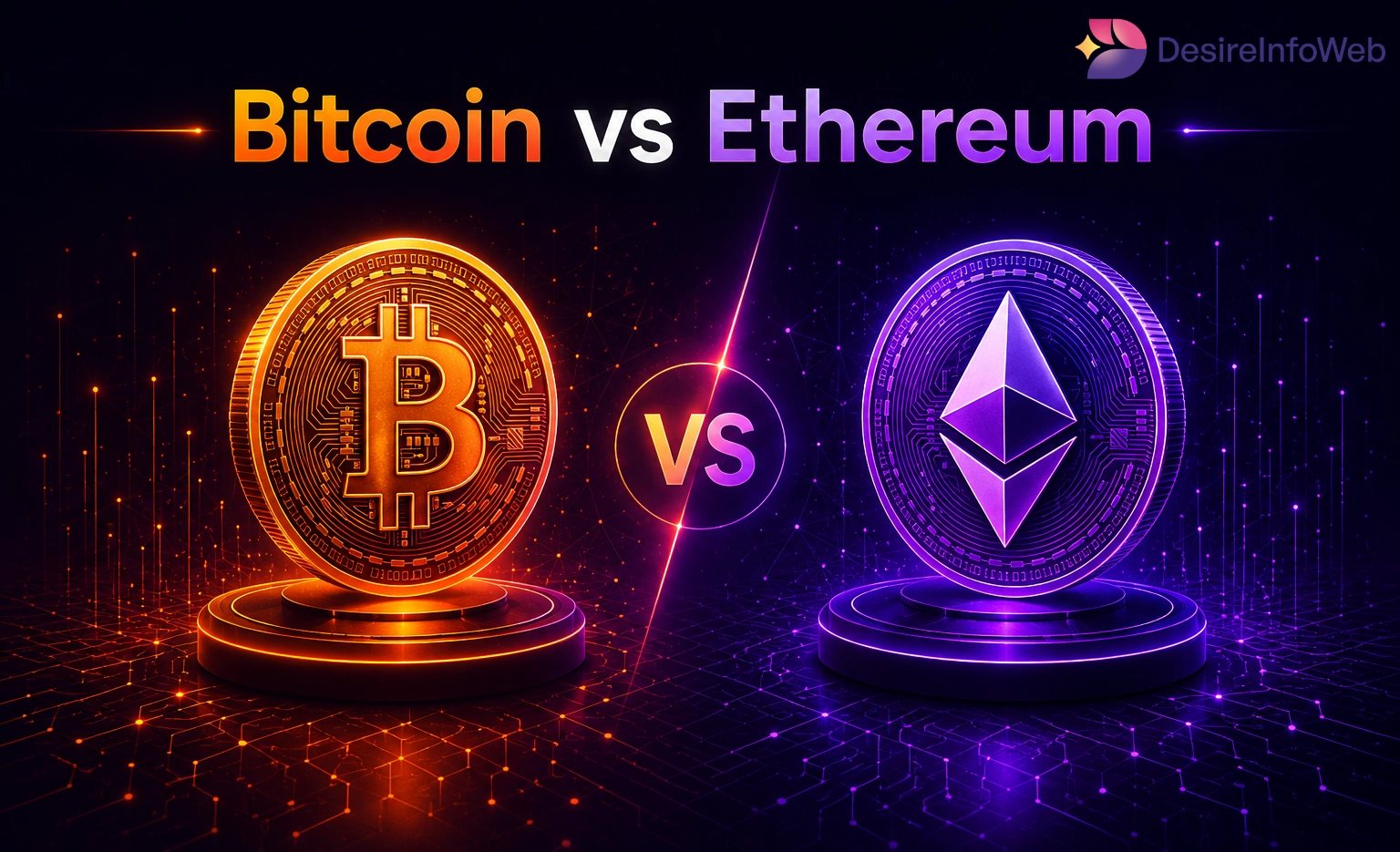
Bitcoin and Ethereum are the two largest blockchain networks in the world. While both are built on Blockchain Technology, they serve different purposes. Bitcoin was designed as a decentralized digital currency, whereas Ethereum enables smart contracts and decentralized applications. In this guide, we compare Bitcoin vs Ethereum, their key features, use cases, consensus mechanisms, and business applications.
Bitcoin and Ethereum are the two most well-known blockchain platforms, but they were created with different goals and use cases in mind. To understand the difference between them, it is important to first understand what each platform was designed to achieve.
Bitcoin focuses primarily on decentralized digital money, while Ethereum extends blockchain capabilities through programmable applications and smart contracts.
What is Bitcoin?
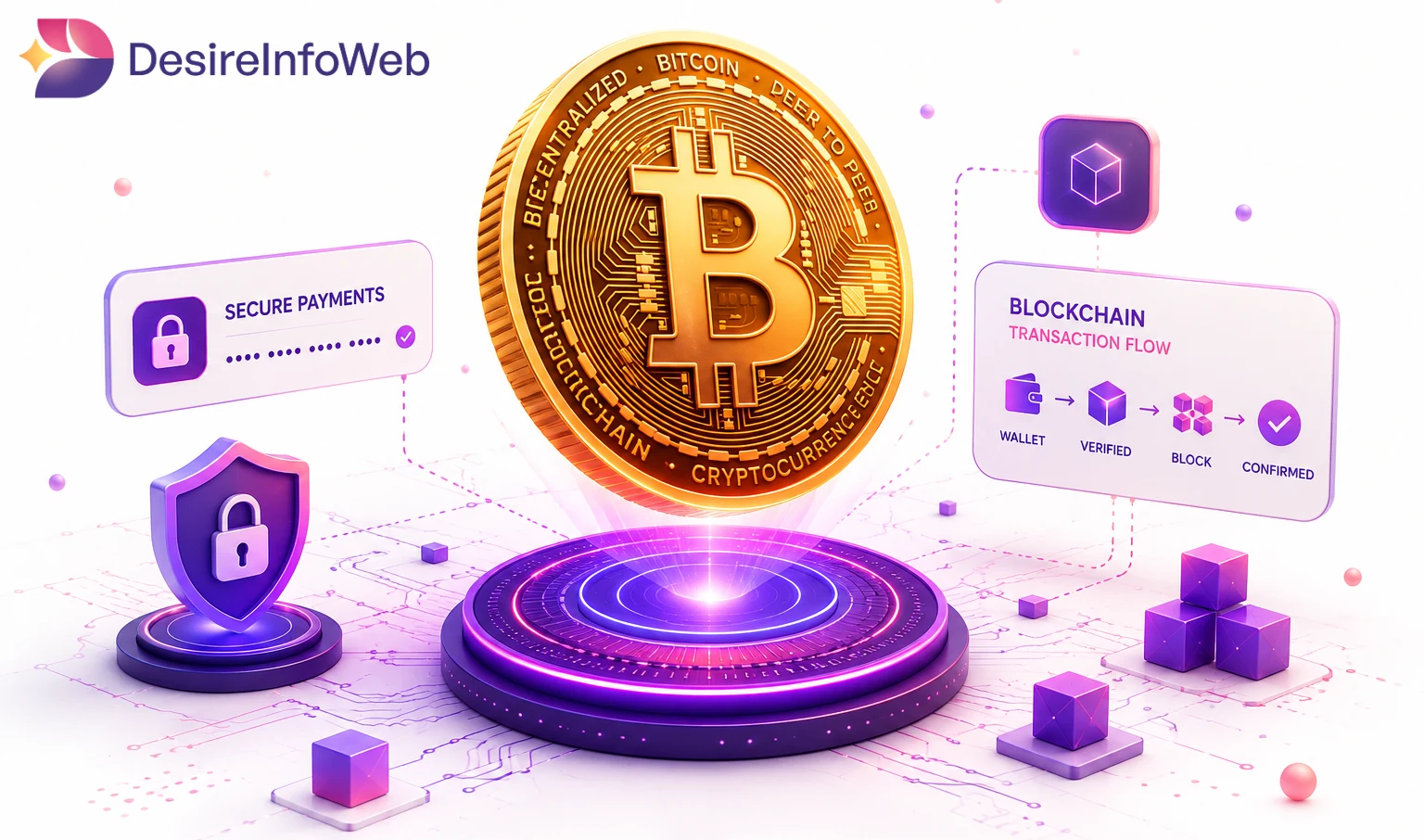
Bitcoin was the first cryptocurrency and the first major real-world implementation of blockchain technology.
It was introduced in 2009 with the primary goal of creating:
decentralized digital money
a peer-to-peer payment system
an alternative to traditional banking systems
Bitcoin allows users to transfer value directly without relying on a bank or financial intermediary.
You → Bank → Another Person
Bitcoin Payment Flow
You → Bitcoin Network → Another Person
Main Purpose of Bitcoin
Bitcoin mainly focuses on:
digital payments
secure value transfer
decentralized money
store of value
What is Ethereum?
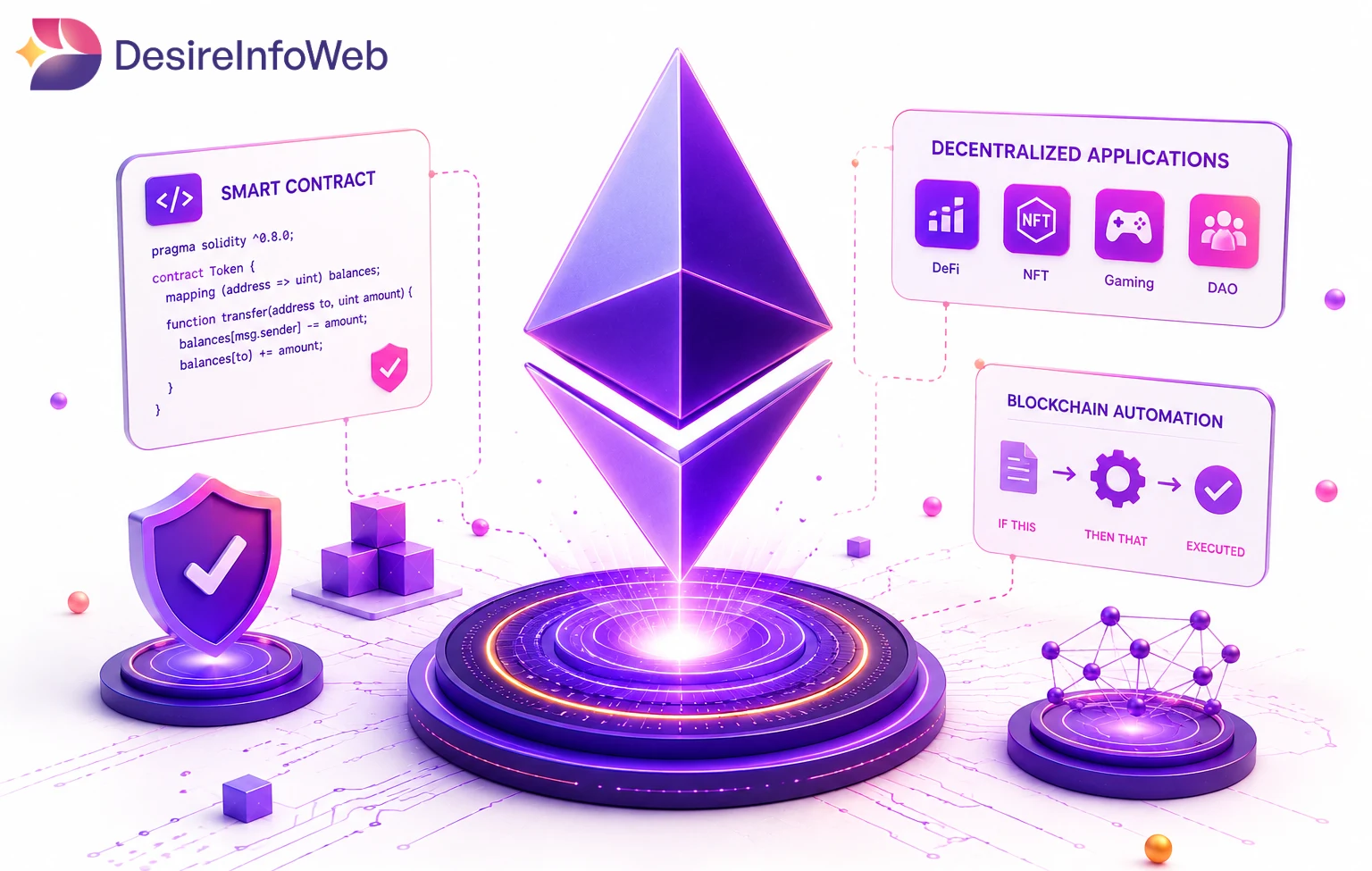
Ethereum is a blockchain platform designed to go beyond digital currency.
Ethereum introduced the concept of:
programmable blockchain applications
smart contracts
decentralized applications (DApps)
Instead of only transferring money, Ethereum allows developers to build applications directly on the blockchain.
What are Smart Contracts?
Smart contracts are self-executing programs stored on the blockchain. These programs automatically execute predefined rules when specified conditions are met.
IF payment is received
THEN grant access or transfer ownership
This automation removes the need for many intermediaries in digital systems.
Main Purpose of Ethereum
Ethereum mainly focuses on:
smart contracts
decentralized applications
blockchain-based automation
programmable digital systems
Ethereum became the foundation for many blockchain ecosystems such as:
DeFi (Decentralized Finance)
NFTs
DAOs
Web3 applications
Key Differences Between Bitcoin and Ethereum
| Feature | Bitcoin | Ethereum |
| Primary Purpose | Digital money | Programmable blockchain platform |
| Main Focus | Payments & store of value | Smart contracts & DApps |
| Native Cryptocurrency | BTC | ETH |
| Blockchain Capability | Limited scripting | Fully programmable environment |
| Smart Contracts | Basic support | Advanced smart contract support |
| Consensus Mechanism | Primarily Proof of Work | Modern Ethereum uses Proof of Stake |
| Popular Use Cases | Payments, value storage | DeFi, NFTs, DApps, automation |
Understanding the Difference in Simple Terms
Think of Bitcoin as decentralized digital currency designed for secure and transparent value transfer.
Think of Ethereum as a decentralized global computing platform that allows developers to build applications and business logic directly on the blockchain.
Real-World Analogy
Bitcoin
Comparable to:
digital cash
digital gold
Mainly focused on transferring and storing value securely.
Ethereum
Comparable to:
an operating system for decentralized applications
Allows developers to create programmable blockchain solutions.
Why Ethereum Became Important
Bitcoin proved that decentralized digital money was possible.
Ethereum expanded the idea by proving that blockchain could also run:
- applications
- business logic
- automated agreements
- decentralized ecosystems
This innovation significantly expanded blockchain adoption across industries.
Conclusion
Both Bitcoin and Ethereum are built on blockchain technology, but they serve different purposes.
Bitcoin focuses primarily on decentralized digital currency and value transfer.
Ethereum focuses on programmable blockchain applications through smart contracts and decentralized systems.
Together, they became the foundation of the modern blockchain ecosystem and inspired the growth of Web3 technologies and decentralized applications. Get More Information Our Contact Us Now !!!