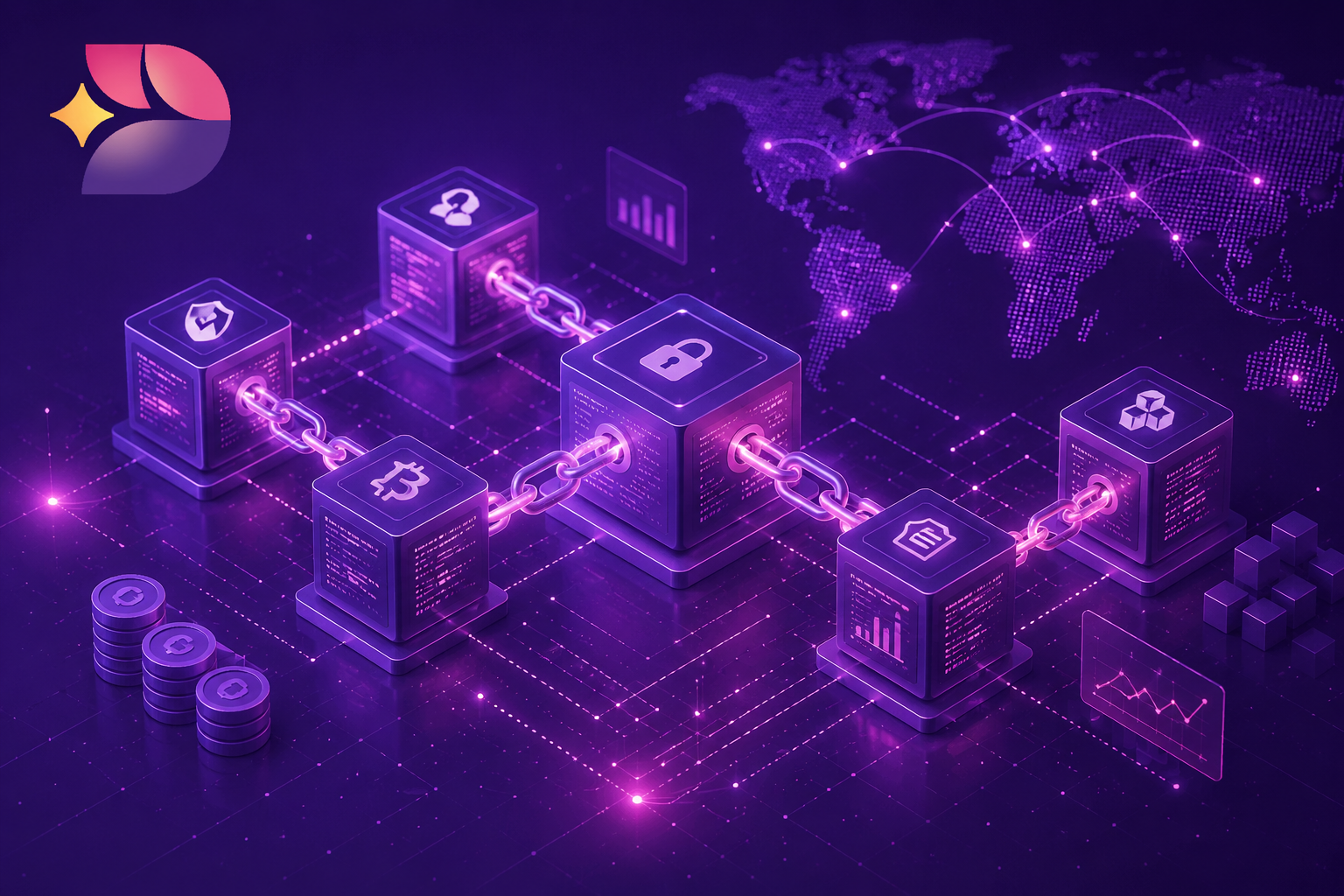
What is Blockchain?
Blockchain is a digital technology used to store and manage data in a secure, transparent, and decentralized manner.
It is called a Blockchain because information is stored inside blocks, and these blocks are connected together in sequence, forming a chain.
Understanding Blockchain in Simple Terms
Block
A block is a container that stores data.
This data may include:
- transaction records
- timestamps
- digital signatures
- other important information
Chain
Each block is connected to the previous block using cryptographic techniques.
This creates a continuous and secure chain of records:
Block 1 → Block 2 → Block 3
Because every block is linked to the previous one, altering old data becomes extremely difficult.
Key Features of Blockchain
1. Decentralization
Blockchain does not depend on a single server or organization.
Instead, data is distributed across multiple computers called nodes.
This means:
- No single authority controls the network
- The system becomes more reliable
- Failure of one node does not stop the entire network
2. Transparency
Transactions recorded on a blockchain can be viewed and verified by participants in the network.
This improves:
- Trust
- Traceability
- Accountability
3. Security
Blockchain uses cryptography to secure data and validate transactions.
Each block is protected using cryptographic hashing, making unauthorized changes extremely difficult.
4. Immutability
Once data is added to the blockchain and confirmed by the network, modifying or deleting it becomes extremely difficult.
This makes blockchain highly suitable for systems where data integrity is important.
How Blockchain Works
A simplified blockchain transaction flow looks like this:
1. A user initiates a transaction
2. The transaction is shared with the blockchain network
3. Network participants verify the transaction
4. The verified transaction is stored inside a block
5. The block is added to the blockchain permanently
Once added, the record becomes part of the distributed ledger.
Real-World Example
Bitcoin Transactions
When someone sends Bitcoin:
- The transaction is broadcast to the network
- Nodes verify whether the transaction is valid
- The transaction is stored inside a block
- The block is added to the blockchain
- The transaction becomes permanently recorded
- No central bank is required to manually approve the transaction.
Common Use Cases of Blockchain
Blockchain is used in many industries beyond cryptocurrencies.
Cryptocurrencies
Examples:
- Bitcoin
- Ethereum
Used for decentralized digital payments and financial systems.
Smart Contracts
Programs that automatically execute predefined rules on the blockchain.
Example:
- Automatic payment release after conditions are fulfilled
Supply Chain Tracking
Used to track products from manufacturing to delivery with transparent records.
Identity Verification
Can help create secure and tamper-resistant digital identity systems.
Voting Systems
Blockchain-based voting systems can improve transparency and reduce risks of vote tampering.
Why Blockchain is Important
Blockchain introduces a new way of building digital systems where:
- Trust is established through technology
- Records become transparent and verifiable
- Dependency on intermediaries is reduced
- Data becomes more secure and tamper-resistant
It enables secure peer-to-peer interaction without requiring complete reliance on a central authority.
Conclusion
Blockchain is a decentralized digital ledger technology that securely stores information across a distributed network.
By combining:
- Decentralization
- Cryptographic security
- Transparency
- Immutability
blockchain creates systems that are more secure, trustworthy, and resistant to manipulation compared to many traditional centralized systems. For More Details Our Contact Us Now !!!