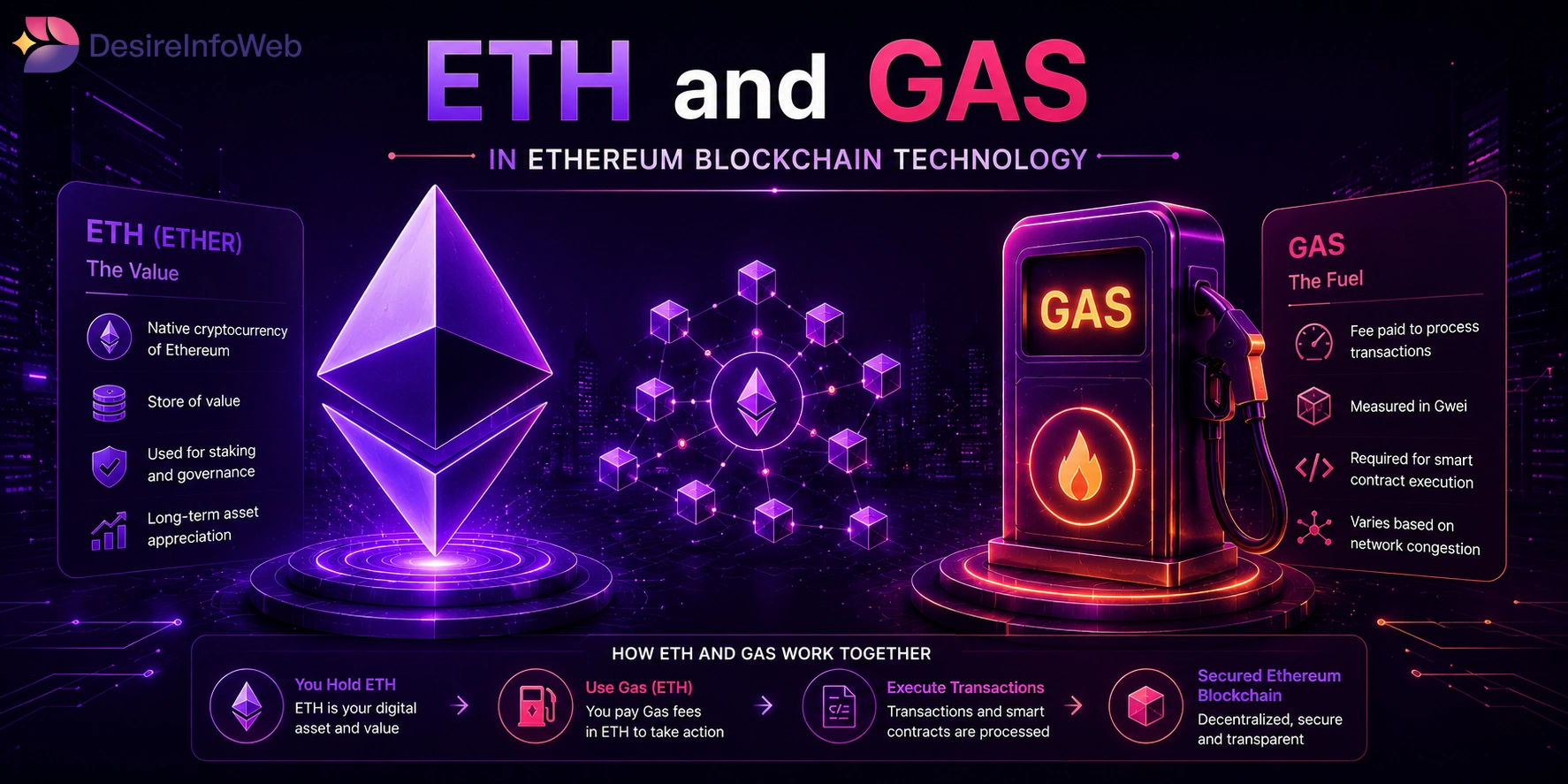
ETH and Gas are two essential concepts in the Ethereum blockchain. ETH is the native cryptocurrency of Ethereum, while Gas is the mechanism used to measure and pay for computational work on the network. Understanding Ethereum gas fees and how ETH is used can help beginners navigate transactions, smart contracts, and decentralized applications more effectively.
What is ETH and Gas?
While learning Ethereum, two important terms appear frequently:
- ETH
- Gas
Both are fundamental to how the Ethereum network operates.
Understanding these concepts is important because every transaction and smart contract interaction on Ethereum depends on them.
What is ETH?
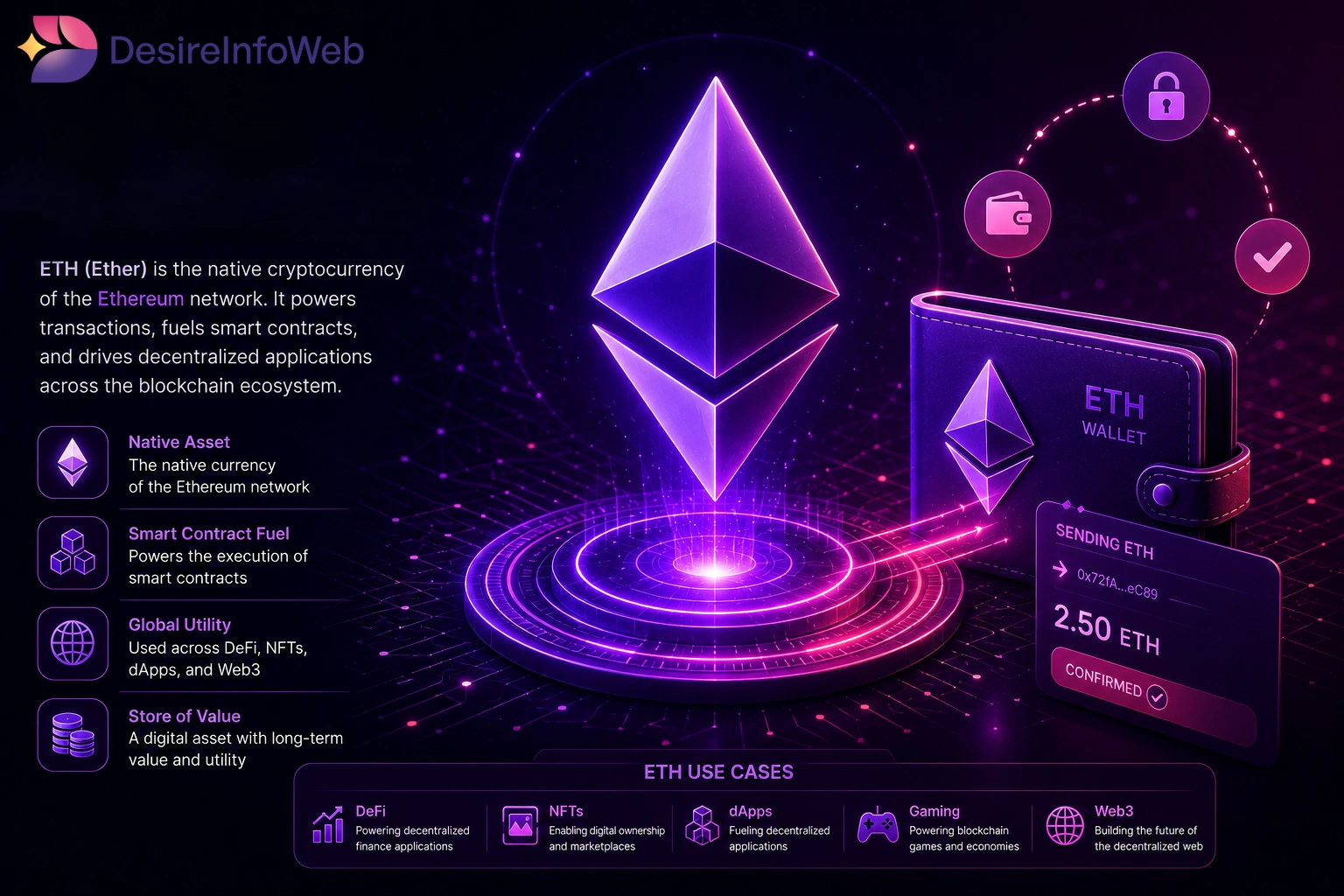
Ether (commonly called ETH) is the native cryptocurrency of the Ethereum network.
Just like:
• Bitcoin uses BTC
• Ethereum uses ETH
ETH acts as the primary digital asset used within the Ethereum ecosystem.
ETH can be viewed as the fuel currency of the Ethereum ecosystem. It is both a transferable digital asset and the payment method for blockchain operations.
Uses of ETH
ETH is used for multiple purposes on the Ethereum network.
1. Sending and Receiving Value
Users can transfer ETH between wallet addresses similar to digital payments.
Example:
User A → Sends ETH → User B
2. Paying Transaction Fees
Every operation performed on Ethereum requires transaction fees, which are paid using ETH.
These fees are known as:
- Gas Fees
3. Smart Contract Execution
ETH is used to pay for executing smart contracts and decentralized applications (DApps).
4. Staking and Network Security
In Ethereum’s Proof of Stake (PoS) system, validators stake ETH to help secure the network and validate transactions.
Simple Analogy for ETH
You can think of ETH as:
- the fuel currency of the Ethereum ecosystem
It is both:
- a transferable digital asset
the payment method for blockchain operations
What is Gas?
Gas is a unit that measures the amount of computational work required to perform operations on Ethereum.
Gas itself is not a cryptocurrency.
Instead, it is a measurement system used to calculate:
- processing cost
- computational effort
- blockchain resource usage
Why Gas Exists
Ethereum is a programmable blockchain.
Operations such as:
- sending ETH
- executing smart contracts
- minting NFTs
- swapping tokens
- interacting with DApps
all require computational resources from the network.
Gas helps:
- measure this computational work
- prevent network abuse
compensate validators for processing transactions
Every Ethereum Operation Consumes Gas
Different operations require different amounts of gas.
Simple Operations
Usually consume less gas.
Examples:
- sending ETH
- simple transfers
Complex Operations
Require more gas.
Examples:
- smart contract execution
- DeFi transactions
- NFT minting
- complex blockchain logic
More computational work = More gas required.
How Gas Fees Work
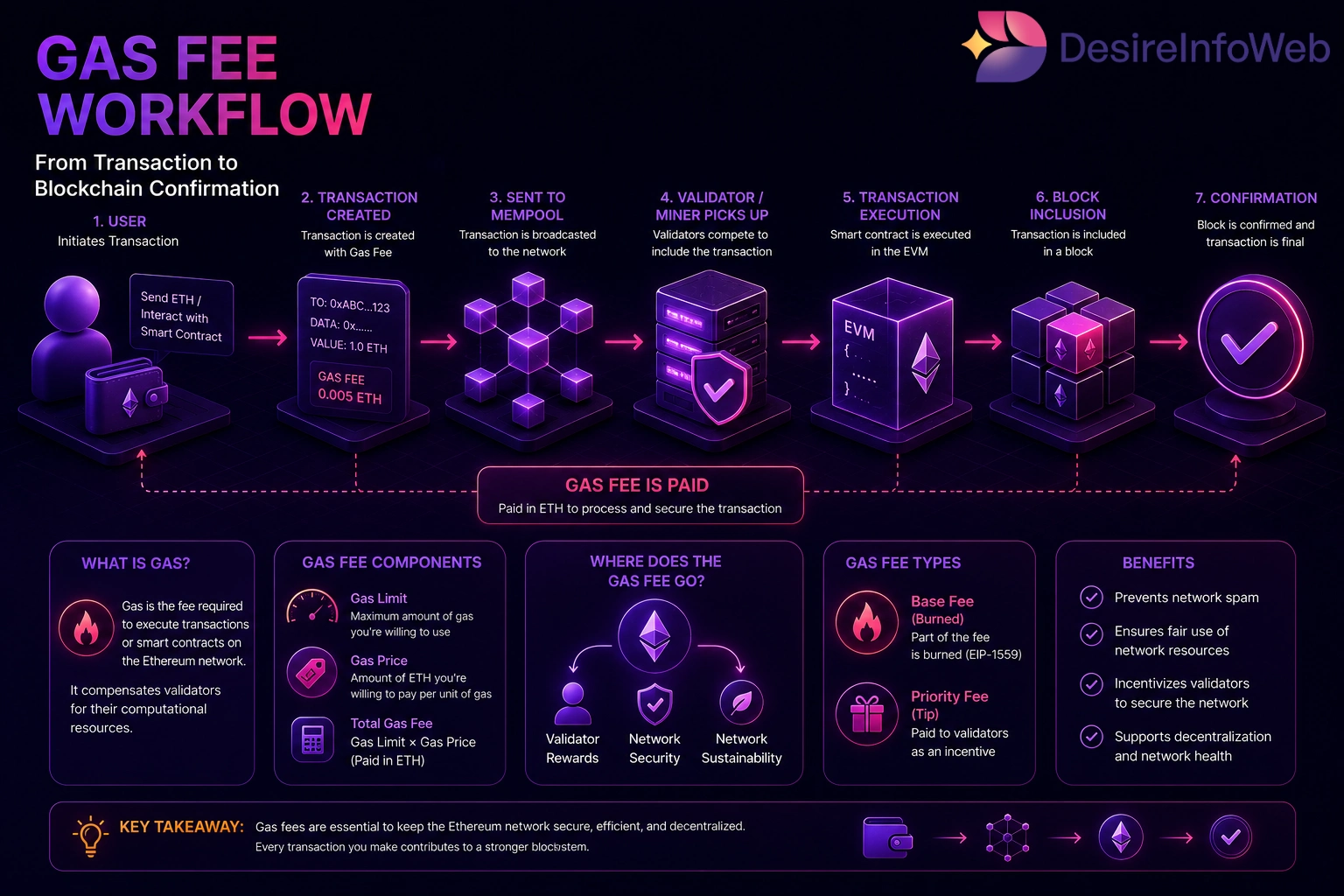
When a user performs an action on Ethereum:
1. The network calculates the required gas
2. The user pays the fee using ETH
3. Validators process the transaction
The fee depends on:
- network demand
- transaction complexity
- gas price at that moment
Simple Real-World Analogy
| Concept | Analogy |
|---|---|
| ETH | Digital money used within Ethereum |
| Gas | Processing or service fee required for blockchain operations |
Example of Gas Usage
- Executes contract logic
- Updates blockchain data
- Validates the transaction
Why Gas is Important
- Prevents spam transactions
- Protects network resources
- Measures computational effort
- Rewards validators for processing transactions
Difference Between ETH and Gas
| Feature | ETH | Gas |
|---|---|---|
| Type | Cryptocurrency | Unit of computational measurement |
| Purpose | Transfers value and pays fees | Measures blockchain processing work |
| Used For | Payments, staking, transactions | Calculating execution cost |
| Stored in Wallets | Yes | No |
| Required for Transactions | Yes | Used to determine fee amount |
Conclusion
ETH and Gas are core components of the Ethereum ecosystem.
- ETH is the native cryptocurrency used for payments, staking, and transaction fees.
- Gas is the measurement system used to calculate the computational cost of blockchain operations.
Together, they enable Ethereum to operate as a decentralized and programmable blockchain platform capable of running smart contracts and decentralized applications.