Introduction
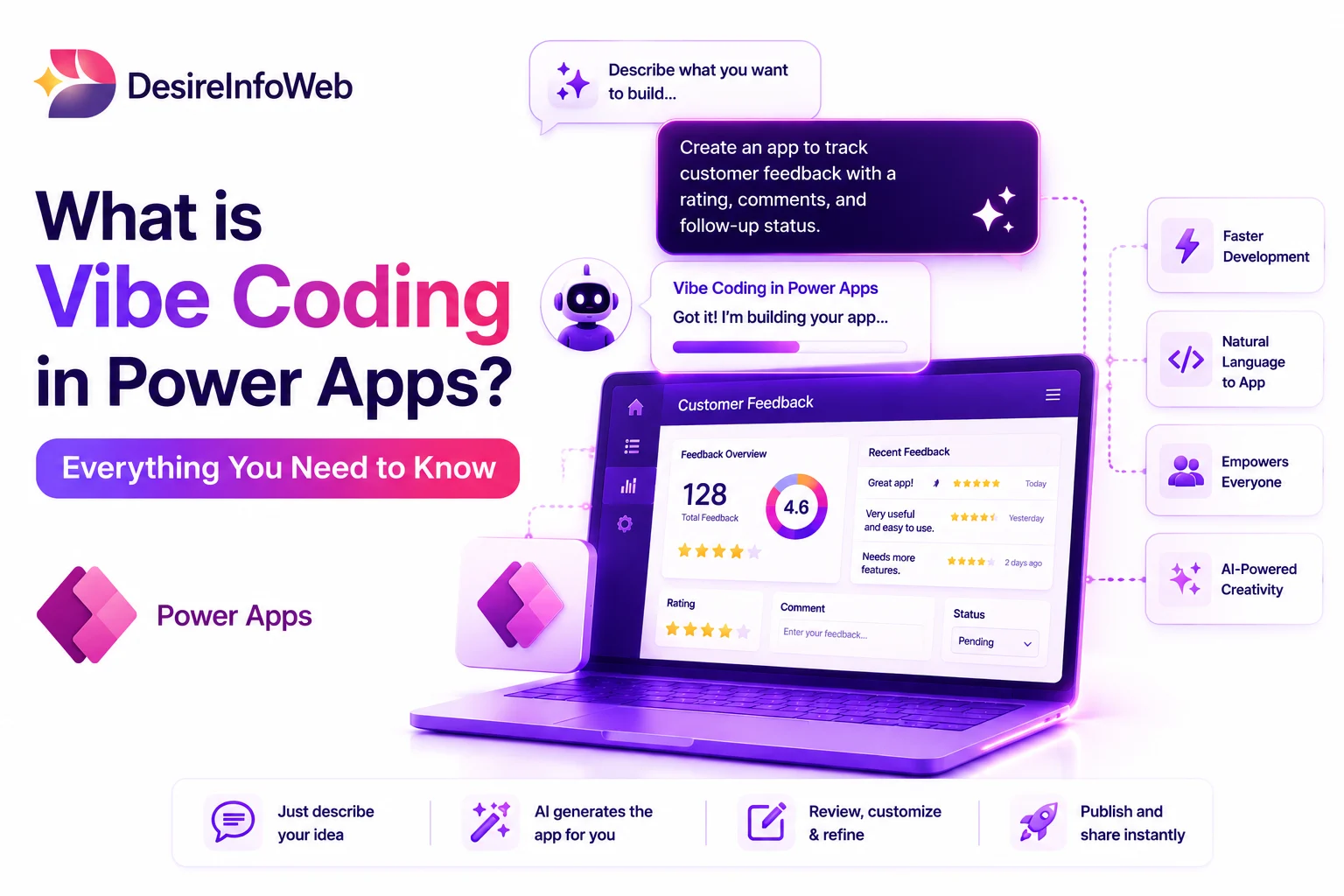
Microsoft’s Power Apps is changing how people build applications by introducing Vibe Coding. This approach uses artificial intelligence to assist throughout the application development process.
Instead of starting with coding, database design, and other technical activities, users can describe what they want an application to do. Artificial intelligence performs much of the work required to create the application.
A common question is how far this capability can go. Can artificial intelligence create an application ready for production, or are professional developers still needed? Understanding both the strengths and limitations of artificial intelligence is essential.
What Is Vibe Coding in Power Apps?
Vibe Coding in Power Apps is a modern approach to application development that was introduced at Microsoft Ignite 2025 as part of the Microsoft Power Platform ecosystem. It combines the speed and efficiency of artificial intelligence with the security, governance, and scalability that organizations require.
Usually, making an application takes a lot of time and technical expertise. You must gather requirements, design databases, write code, make user interfaces test the application, and deploy it. This can take weeks or months.
Vibe Coding is different. It lets users describe what they want the application to do in a language. Artificial intelligence then makes the application. This is not like tools that just make visual forms or drag-and-drop interfaces. Vibe Coding makes applications using modern technologies like TypeScript and React.
"Make an application that lets employees ask for time off, and managers can approve or reject it."
How the Vibe Workflow Actually Works
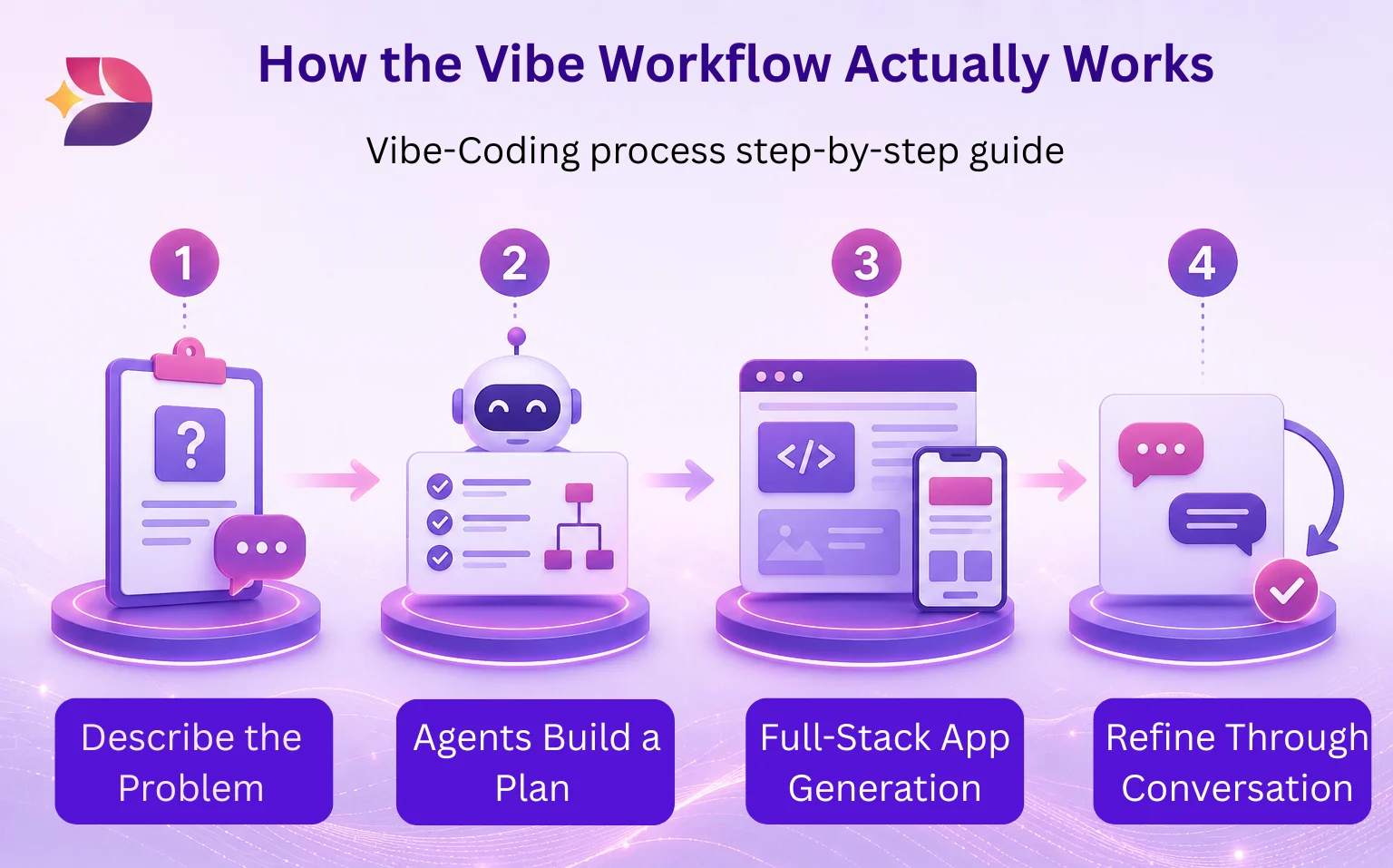
1. Describe the Problem
You start by describing what you want the application to do. You can type this. Use voice dictation. For example, you might say: "Make an application that lets employees ask for time off, and managers can approve or reject it."
There is a feature that helps you make your description better. Artificial intelligence can understand it. The better your description is, the better the application will be.
2. Agents Build a Plan
After you describe what you want, artificial intelligence starts analyzing it. There are agents that work together to make a plan for the application.
One agent looks at what you want the application to do. Figures out what it needs to do. Another agent makes a data model, which's like a blueprint for the applications data.
3. Full-Stack App Generation
After the plan is made the artificial intelligence starts making the application. It makes the user interface, the data model, and all other parts of the application.
This is different from tools that just make code snippets. Vibe Coding makes an application that you can test and refine.
4. Refine Through Conversation
You can make the application better by talking to intelligence. You can say things like: "Add a dashboard" or "Make a report." The artificial intelligence will update the application.
You can do this again to make the application what you want. You can always look at the code and change it if you need to.
What Makes Vibe Coding Different?
There are tools that use artificial intelligence to make applications, but they are not like Vibe Coding. Those tools just make code. They do not help with deployment, security, or governance.
Vibe Coding is part of the Power Platform, so it has all the features that organizations need. It has role-based security, managed hosting, and compliance features.
Vibe Coding combines application generation with governance, deployment, security, and compliance capabilities.
Where Does Vibe Coding Work Well?
Vibe Coding is good at making applications that're simple and straightforward. It is good for things like employee directories to leave management systems and data entry applications.
It is also good for making prototypes. You can make an application. Test it to see if it is what you want. Then you can refine it. Make it better.
Where Does Vibe Coding Need a Developer?
Even though Vibe Coding can make a lot of the application, it still needs a developer for some things. Complex business rules and security are things that need a developer.
Developers are also needed for things like performance optimization and governance. They need to make sure the application is secure and works well.
Risks and Limitations
Vibe Coding is still a technology, so it has some limitations. It only works in English. It is not available everywhere.
Organizations need to be careful when they use Vibe Coding. They need to make sure that the applications they make are secure and comply with their policies.
Does This Replace Developers?
No Vibe Coding does not replace developers. It just changes what they do. Developers used to spend a lot of time making application structures and doing other routine tasks.
Now developers can focus on important things like solution architecture, security design and governance. They can also focus on making the application work well and making sure it is secure.
Conclusion
Vibe Coding is a way of making applications that use Artificial intelligence to help with the development process. It is a step forward in the evolution of business application development.
It can help organizations make applications faster and with effort. It still needs human oversight to make sure the applications are secure, scalable, and well-governed. The value of Vibe Coding is not that it replaces developers, but that it helps organizations innovate faster and reduce the effort required to build solutions.