Introduction
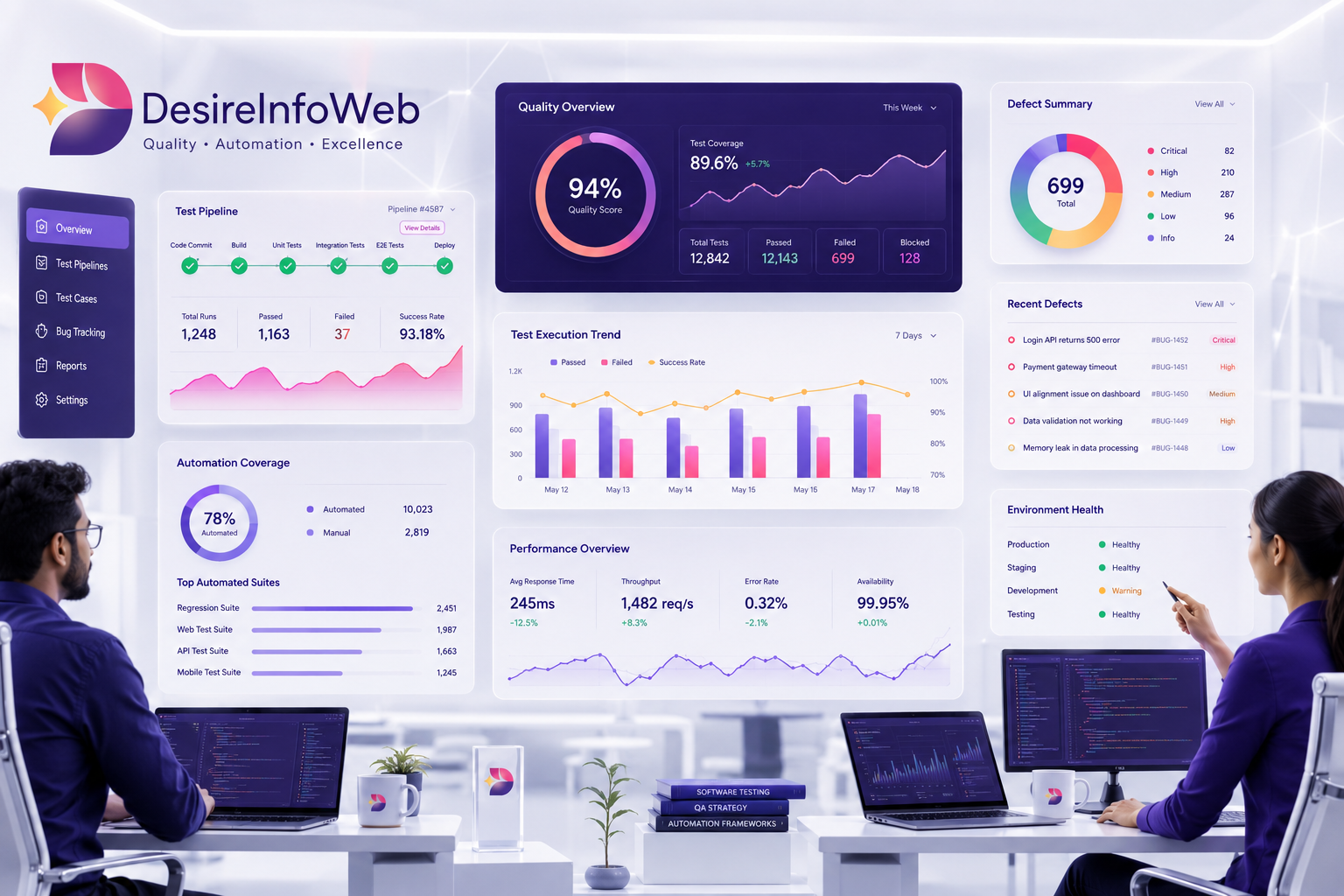
In today's software-driven business environment, application quality directly impacts customer satisfaction, operational efficiency, and brand reputation. Organizations rely on web platforms, mobile applications, cloud services, and enterprise systems to support critical business processes. As a result, quality assurance (QA) has become an essential discipline that helps ensure software performs reliably under real-world conditions.
Quality assurance extends far beyond identifying defects. It provides a structured approach to validating functionality, performance, usability, security, and overall user experience. By integrating testing throughout the development lifecycle, organizations can reduce risk, accelerate delivery, and release software with greater confidence.
Why Quality Assurance Testing Matters
Quality assurance is a strategic investment that supports both technical excellence and business success. Effective QA programs help teams identify issues early, validate requirements, and maintain consistent product quality across releases.
Modern development teams increasingly adopt continuous integration and continuous delivery (CI/CD) practices. Within these environments, QA serves as a critical safeguard that validates software quality before deployment while supporting rapid release cycles.
- Enhanced User Experience: Early defect detection creates a smoother, more reliable experience for end users.
- Cost Savings: Resolving issues during development is significantly less expensive than fixing production defects.
- Risk Mitigation: Comprehensive testing reduces the likelihood of outages, failures, and operational disruptions.
- Customer Trust: Consistently high-quality software strengthens credibility and long-term customer relationships.
- Regulatory Compliance: Testing helps verify adherence to industry regulations, standards, and security requirements.
Our Quality Assurance Testing Services
Comprehensive QA programs combine multiple testing methodologies to validate software from different perspectives. Core service areas include:
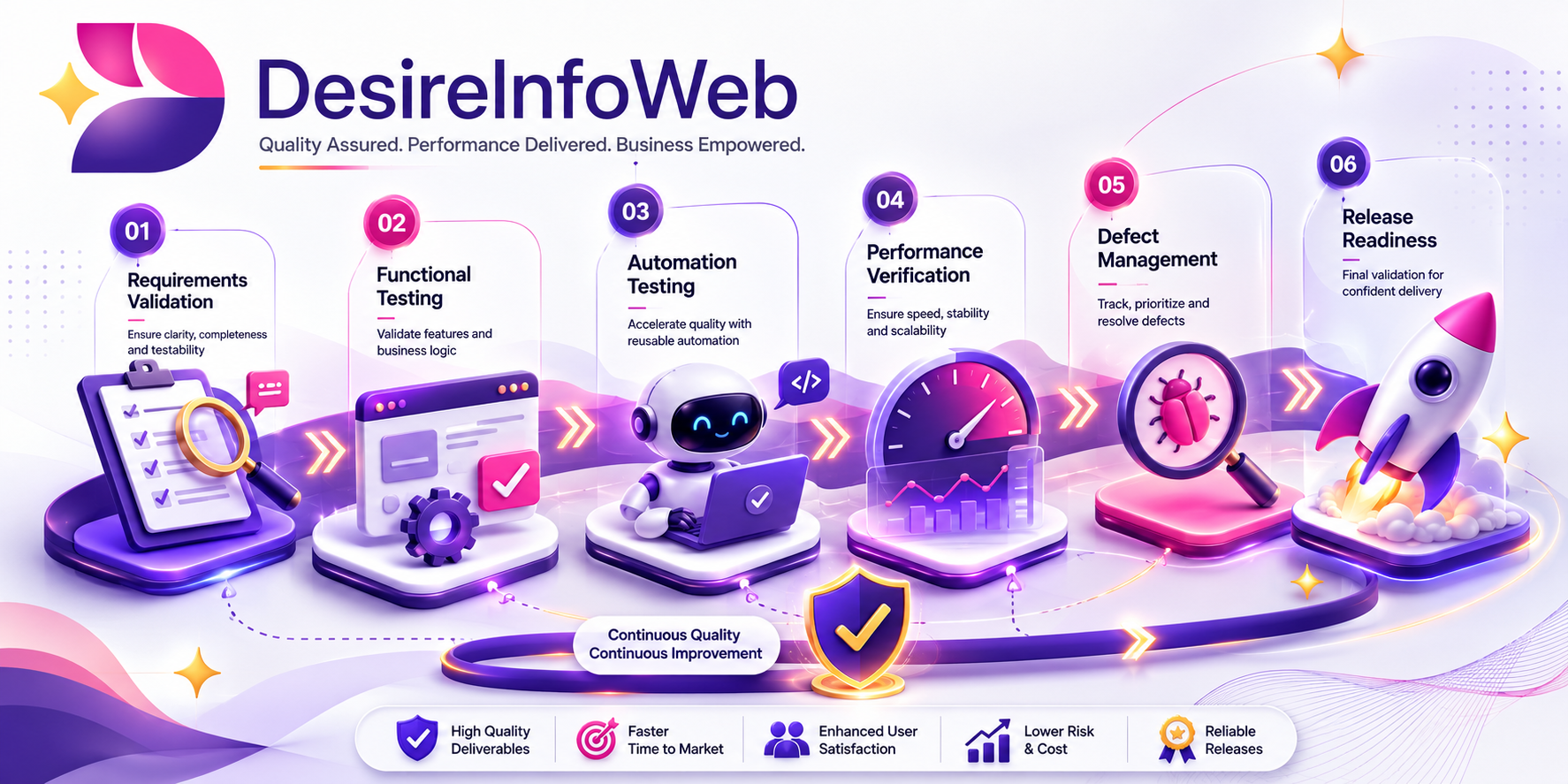
Combining these approaches helps organizations achieve reliable releases while maintaining development velocity and product quality.
| Service | Purpose |
|---|---|
| Manual Testing | Human-driven validation to identify usability issues and complex business logic defects. |
| Automated Testing | Faster execution of repetitive tests, regression suites, and release validation. |
| Functional Testing | Verification that application features behave according to requirements. |
| Performance Testing | Evaluation of speed, scalability, responsiveness, and stability under load. |
| Regression Testing | Confirmation that new changes do not negatively affect existing functionality. |
Why Choose Desire InfoWeb for QA Testing?
- Experienced Team: Skilled QA professionals with expertise across industries and technologies.
- Modern Testing Tools: Utilization of proven frameworks, automation platforms, and testing methodologies.
- Customized Engagements: Testing strategies aligned with project objectives and business requirements.
- Global Delivery Capability: Experience supporting organizations across Canada, the USA, and international markets.
- Proven Results: Focus on delivering dependable software quality and measurable business value.
Industries We Serve
Quality assurance requirements vary significantly across industries. Testing strategies must account for regulatory obligations, security expectations, performance demands, and user experience considerations.
Each sector presents unique challenges, from safeguarding sensitive financial and healthcare data to ensuring scalability for high-traffic digital platforms. Tailored QA strategies help organizations meet these demands while maintaining reliability and compliance.
- Healthcare
- E-commerce
- Finance
- Education
- Manufacturing
- Media and Entertainment
Conclusion
Software quality is no longer optional. It is a fundamental business requirement that influences customer satisfaction, operational continuity, and long-term growth. A comprehensive quality assurance strategy enables organizations to release software with confidence while reducing risk and improving performance.
Whether launching a new application, modernizing an existing platform, or scaling enterprise systems, structured QA testing helps ensure software consistently meets user expectations and business objectives.
Thank You
Thank you for reading. For additional information about quality assurance testing services, application quality improvement initiatives, or software testing best practices, connect with the team at Desire InfoWeb.